
Menu
St. Louis Concrete Foundation Repair: Warning Signs to Watch
Concrete Foundation Repair St. Louis
Recognizing early warning signs of foundation problems saves St. Louis homeowners thousands of dollars in repair costs while preventing catastrophic structural failures. Missouri’s clay-rich soils, freeze-thaw cycles, and dramatic moisture fluctuations create unique challenges for residential foundations throughout the metro area. Properties from Kirkwood to Ferguson experience foundation stresses that manifest through visible symptoms long before serious damage occurs. Understanding what to watch for empowers homeowners to address issues promptly when concrete foundation repair remains affordable and effective. Ignoring these warning signs leads to progressive deterioration requiring expensive emergency interventions, potentially costing tens of thousands of dollars.
Foundation Cracks: Understanding the Differences
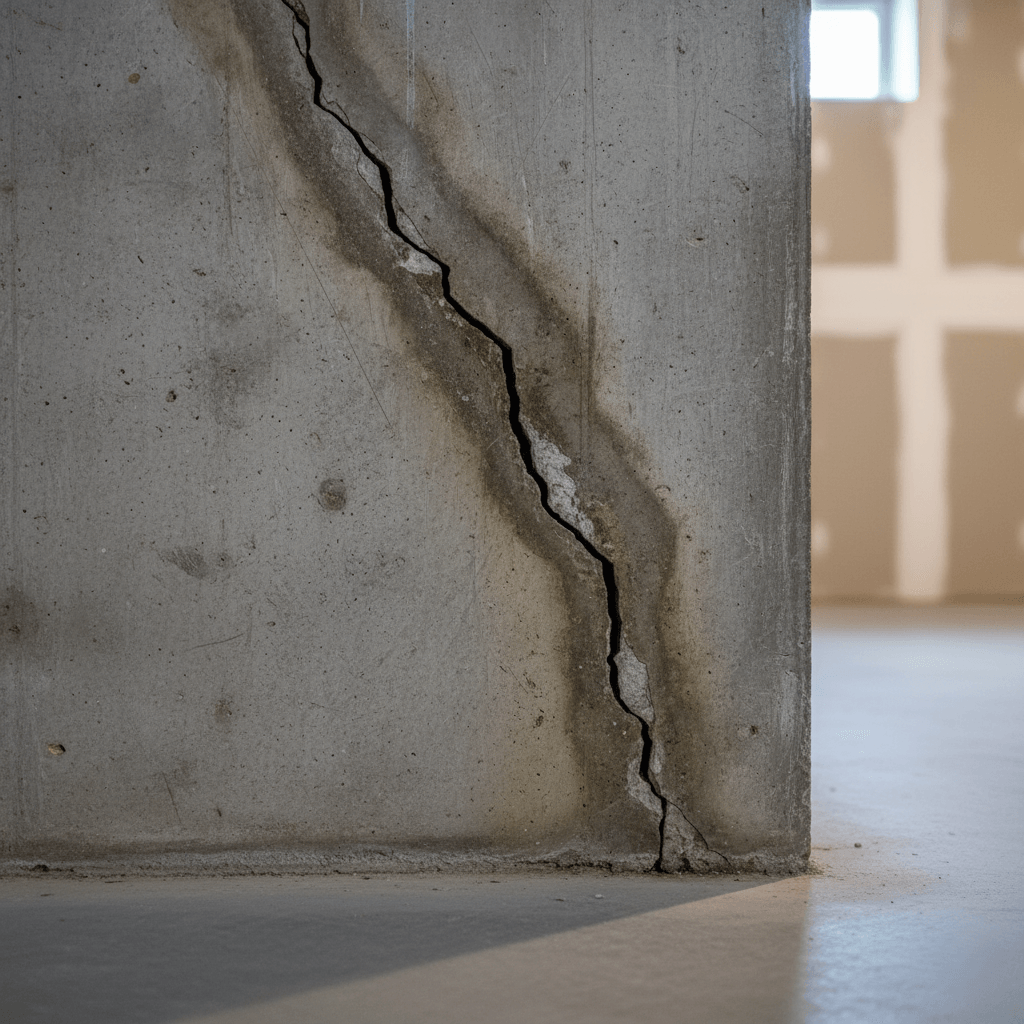
There are a lot of factors to consider when evaluating the differences in how a home was built versus its current condition regarding the home’s foundation. For example, some types of cracks in a home’s foundation do not necessarily signify a serious issue with the home’s foundation. Hairline shrinkage cracks that measure less than 1/16 inches are usually caused by the drying of the cement in a new foundation. They will normally stay stable and generally do not present a significant structural concern. However, cracks larger than 1/4 inches, growing over time, or horizontally indicate possible movement in the foundation. The stair-step cracking in a block foundation is a serious indication of settlement and will need to be evaluated by a professional. Properties in Glendale and Rock Hill should check their homes for foundation cracks periodically to see if they have grown or developed new cracks.
Types of Cracking and Their Causes
The location of cracking is very important when it comes to identifying the type of problem you have with your home’s foundation. Diagonal cracks that begin at a corner of a window or door are indicative of the settling of the foundation or the structural movement of the building. The diagonal orientation of the crack usually grows the longest in one direction, signifying the direction of the settling. A crack that appears where a wall meets the ceiling can mean the foundation is moving throughout the entire structure.
Cracks in the basement floor that run in many different directions can indicate that the soil is settling under the slab. Exterior cracks in the foundation that are visible on an exposed basement wall should be addressed immediately, especially if you notice water leaking from the crack. Homeowners in Maplewood and Brentwood should take pictures of their cracks using a ruler for scale, and document the changes in width and direction of the cracks each month, so that they have this documentation available when a professional inspects them.
Doors and Windows That Will Not Open or Close Properly
Movement in the foundation of a home can also manifest itself by making doors and windows harder to open and shut. As a home settles or moves unevenly, the frames of the doors and windows become out of alignment with their openings. Doorknobs that used to turn smoothly now catch on the frame. Windows that used to slide up and down in their tracks now get stuck or cannot be closed all the way. There are gaps between the doors and the frames where there used to be a tight seal. These are all indicators that the structure is being stressed by the movement in the foundation. Homes in Des Peres and Town and Country that are experiencing problems with multiple doors or windows should assume that the issue is with the foundation of the home rather than the individual door or window hardware.
Symptoms Progressively Getting Worse
One of the biggest differences in dealing with foundation problems versus just regular maintenance is that the foundation problems tend to progressively get worse over time. What may have needed a little bit of adjustment one year may need to be adjusted again the next year because of continuing movement in the foundation. The movement may slow down a bit during certain seasons (i.e., when the ground dries out), but then it may pick right back up again when the season changes (i.e., when the ground gets wet).
If the problem doesn’t improve after the first round of repairs, or if the problem returns quickly, it is likely that the movement in the foundation is still happening and will continue to happen until something is done to stop it. If multiple doors and windows throughout different parts of your home are having problems, it is likely that the problem is with the foundation of your home and not just a few isolated problems with the individual doors and windows. Homeowners in Crestwood and Sunset Hills who are experiencing progressive symptoms, such as sticking doors and windows, should schedule a professional to inspect their foundation before too much damage occurs.
Floors Are Uneven or Sloped
If the floors in your home are uneven or sloped, it could be an indicator of serious foundation problems that are compromising the structural integrity of your home. While a slight slope may be hard to detect at first, putting marbles on the floor will reveal which way the floor is sloping. Floors that are dipping towards the center or around interior walls could indicate that the foundation is sinking in those areas. Springy or bouncy floors in homes with crawl spaces can indicate that the foundation support system has failed. Floors covered in tile that develop cracks in multiple places can indicate that the foundation is shifting and causing the tile to crack. Homeowners in Webster Groves and Shrewsbury who are experiencing these symptoms should not automatically attribute them to old age in the construction of their home. Many times, foundation problems cause floors to become uneven and/or sloped, and will need to be assessed by a professional and possibly repaired with concrete.
Measuring Slope in Your Floors
Homeowners can use simple tools to measure the slope of their floors and to help assess whether or not they have a serious foundation problem. Laser levels can measure the slightest deviation from horizontal across the span of a room. Using carpenter’s levels on the floors in several locations can give you a measurement of the slope and direction of the slope. Floors with slopes greater than 1/2 inch per 20 feet of floor space may be experiencing serious foundation settlement.
Taking measurements of the slope of your floors every three to four months can help you determine if the settlement of your home is continuing, or if it has stopped. Homeowners in Affton and Lemay who are documenting an increase in slope should contact a professional to evaluate the extent of the problem and what steps are needed to correct it. Additionally, if you are experiencing floor issues combined with other symptoms, such as wall cracks or sticky doors, you probably havefoundation problems that need to be diagnosed by a professional.
Separations Between Walls and Adjacent Surfaces
As a home’s foundation settles or moves, the walls and adjacent surfaces can pull away from each other, leaving large gaps. Ceiling tiles that were once tightly fastened to the ceiling and now hang loose or fall off may be a sign of the ceiling pulling away from the wall at the intersection of the two. Similar to the ceiling pulling away from the walls, walls that once pulled tight against the floor and now pull away from the floor, exposing the edge of the baseboard and the floor, can also be a sign of the wall pulling away from the floor.
These separations occur when the different parts of the structure are moving at different rates due to uneven settlement of the foundation. Crown molding that once fit snugly between the ceiling and the top of the wall now hangs loose, and can be another sign that the structure is experiencing stress due to the uneven settlement of the foundation. Homeowners in Clayton and Ladue who observe these separations should recognize them as potential signs of foundation problems and not just cosmetic issues, especially if they are seeing other signs of foundation problems itheirur home.
Interior vs. Exterior Separations
While both interior and exterior separations can be signs of foundation problems, they can help professionals diagnose the type of problem you are experiencing. Interior separations between partition walls and exterior walls can be a sign that the exterior foundation is settling. If you see a separation between a chimney and the surrounding wall(s), it may be a sign that the chimney foundation has settled separately from the rest of the house foundation. Exterior separations where an addition joins with the original structure of the home can be a sign that the two sections of the home are settling at different rates due to the fact that they were built with different foundation designs.
A porch that pulls away from the side of the house can be a common foundation problem. Homeowners in University City and Richmond Heights who observe these separation locations should note them, since they can help professionals identify specific foundation problems that your home may be experiencing. Additionally, if you see active separations that are getting bigger, it means that the movement in the foundation is continuing, and will need to be addressed as soon as possible with concrete foundation repair methods to prevent further costly damage and repairs.
Water Leaks and Moisture Problems
Leaking water into a home can be caused by cracks in the foundation of a home. Once water penetrates the foundation, it can cause secondary damage to the inside of the home. Water stains on the basement walls can be a sign that water is entering the home through cracks in the foundation or through the porous nature of the concrete. White deposits on the foundation walls, known as efflorescence, can be a sign that water is carrying minerals through the concrete. Unpleasant odors in the basement can be a sign that there is chronic moisture in the home.
Black mold growing on the baseboards or in the corners of the basement can be a sign that there is continuous moisture in the home due to leaks in the foundation. Homeowners in Florissant and Hazelwood who are experiencing these moisture problems should check their home for any signs of foundation problems, as moisture problems are commonly caused by foundation problems, and can contribute to unhealthy indoor air and require remediation in addition to any repairs made to the structural elements of the home.
Seasonal Moisture Patterns
Moisture in the form of rain, snow, sleet, and hail can be a challenge for homes with compromised foundations in Missouri. Heavier-than-normal rainfall in the spring can put a strain on the foundation of your home and can make existing leaks worse. High summer humidity can allow moisture to accumulate in the basement of homes with cracks in the foundation, and can allow water vapor to pass through the foundation into the living space. Winter freeze/thaw cycles can exacerbate existing cracks in foundations as water in the cracks freezes and expands.
Homeowners in Ballwin and Manchester who are tracking moisture problems in their home should pay particular attention to seasonal patterns that may be contributing to the moisture problems, as addressing the moisture problems in conjunction with the foundation problems can save you money in the long run. Additionally, addressing foundation problems before investing in expensive basement finishing projects can save you money in the long run, as a finished basement that is prone to moisture problems will be worthless to you and will cost you money to fix.
Tilted or Separated Chimneys
Chimneys that were built on separate footings can settle at a different rate than the rest of the house foundation. Tilted chimneys can be a sign that the footing supporting the chimney is settling, and that the chimney is pulling away from being straight. Gaps between the chimney and the exterior siding of the home can be a sign of the same thing. Separation between the chimney and the interior of the home can be a sign that the chimney footing is settling at a faster rate than the rest of the house foundation.
A chimney cap that is no longer level can be a sign of significant movement in the foundation of your home. Homeowners in Chesterfield and Wildwood who own homes with brick chimneys should keep an eye on the vertical alignment of the chimney, as a severely tilted chimney can collapse and cause damage to the home or injury to occupants. Severe tilt of a chimney can also be a safety hazard and will need to be addressed as soon as possible by a structural professional.
Repairing Chimney Foundations
Repairing a settling chimney requires specialized methods to stabilize the chimney and prevent further movement. Helical piers can be installed below the footing of the chimney to provide support for the chimney in stable soil layers. Push piers can also be used to provide support for the chimney foundation. In extreme cases, it may be necessary to dismantle the chimney and rebuild it on a more solid footing. Repair costs for settling chimneys can vary greatly depending on the size of the chimney and the method of repair. Costs can range anywhere from $3,000 to $10,000 or more. Homeowners in Ellisville and Clarkson Valley who own homes with settling chimneys should contact a professional to assess the situation and provide a quote for the repairs as soon as possible, as the longer the repairs are delayed, the higher the costs will be, and the greater the safety risks will be.
Bowing or Bulging Foundation Walls
Basement walls that curve inward or outward can be a serious sign of structural problems in a home. If the walls are bowing outward, it can be a sign that the walls are being pushed outward by the weight of the soil outside the home. If the walls are bowing inward, it is more likely a sign that the walls are being subjected to hydrostatic pressure from the soil outside the home, or that the soil is expanding. Walls that are bowing inward are more common than walls that are bowing outward. Both types of wall movement can be a serious structural problem and can ultimately result in a complete failure of the wall. Homeowners in Maryland Heights and Bridgeton who observe wall movement in their home should contact a professional as soon as possible to assess the situation and provide a solution to prevent a total failure of the wall.
Methods Used to Stabilize Bowing Walls
There are several methods that can be used to stabilize bowing walls, depending on the amount of movement and the reason for the movement. Wall anchors can be installed through the wall into the stable earth outside the home to pull the wall back to its original position. Carbon fiber straps can be applied to the wall to prevent further movement and to add strength to the wall. Steel I-beams can be installed vertically against the wall to add structural support to the wall. Helical tiebacks can be anchored to the outside of the home to stabilize the wall.
The cost of repairing bowing walls can vary widely depending on the length of the wall and the method of repair. Cost can range from $5,000 to $15,000 or more. Homeowners in Fenton and Eureka who are experiencing bowing walls should consult with a professional to discuss the various options for stabilizing the walls, as well as the costs associated with each option. It is also recommended that the homeowner address any drainage issues that may be causing the soil pressure that is pushing on the walls, as a repair that addresses only the symptom and not the cause will likely not last.
When to Seek Professional Foundation Repair
The sooner you realize when DIY monitoring is going to transition into a need for professional intervention, the less likely it will be for minor problems to become serious ones. Small, stable cracks that have been present on your home’s foundation for many years are typically okay just to seal up and continue monitoring. But if you see many red flags at once, then you probably want to get a pro out to assess your situation right away. If you have symptoms that are getting progressively worse over time, then you know there is an active problem with your foundation that requires attention.
Even if all of your other symptoms seem mild or non-existent, cracks in your walls larger than 1/4 inch wide are reason enough to hire a professional to evaluate your property. Water in your basement from a leaky foundation or a broken sump pump means you immediately need professional assistance to determine what you can do now to stop the water (waterproofing), and what you’ll need to do to fix any structural damage to your foundation. The entire metro area of St. Louis has homes that could use a professional inspection to diagnose potential foundation problems that may benefit from repair.
Finding the Right Contractor to Help With Your Foundation Repair
You are not going to find two contractors who give you the same opinion on how to fix your foundation. Choosing a licensed structural engineer to evaluate your home’s foundation provides an unbiased analysis, which eliminates any conflict of interest as the engineer does not represent any foundation repair company. Most contractors will give you a free estimate to inspect your foundation, but they also may have some sort of incentive to sell you something, so take advantage of getting multiple opinions on your problem and the best way to solve it. In addition to getting free inspections from various contractors, make sure each contractor gives you a written estimate detailing their method, materials, timeline, and warranty. Get references from the last few jobs they completed to ensure you are working with someone reliable and who delivers high-quality work.
At St. Louis Concrete Works, we have a staff of highly trained professionals who have extensive knowledge and hands-on experience assessing foundation problems throughout the St. Louis Metro Area, and we will provide you with an honest assessment of your specific condition, along with a solution that will correct your foundation problems and stabilize your foundation for decades.
LATEST POSTS